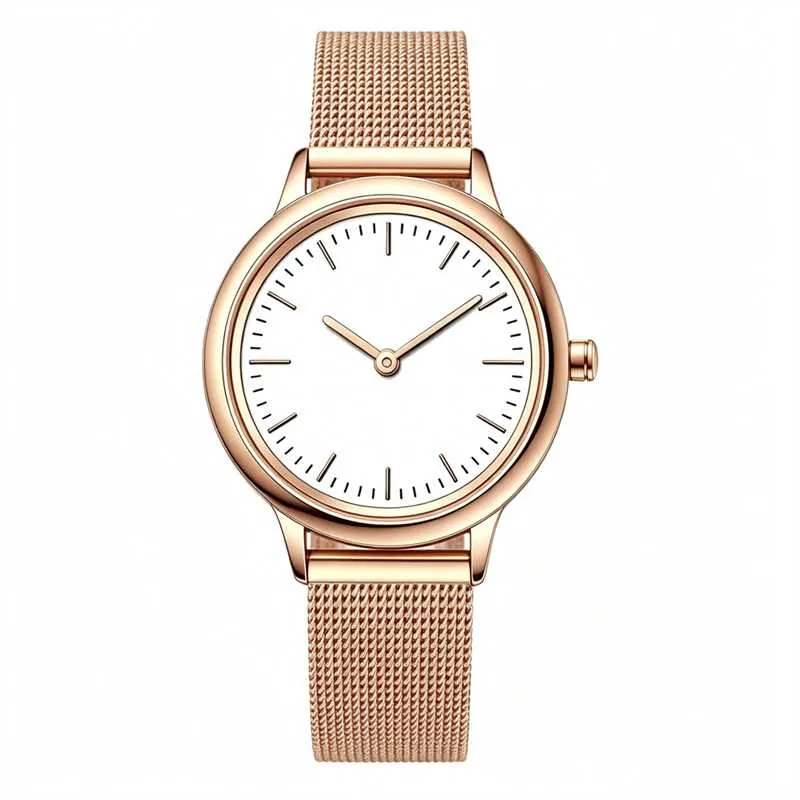
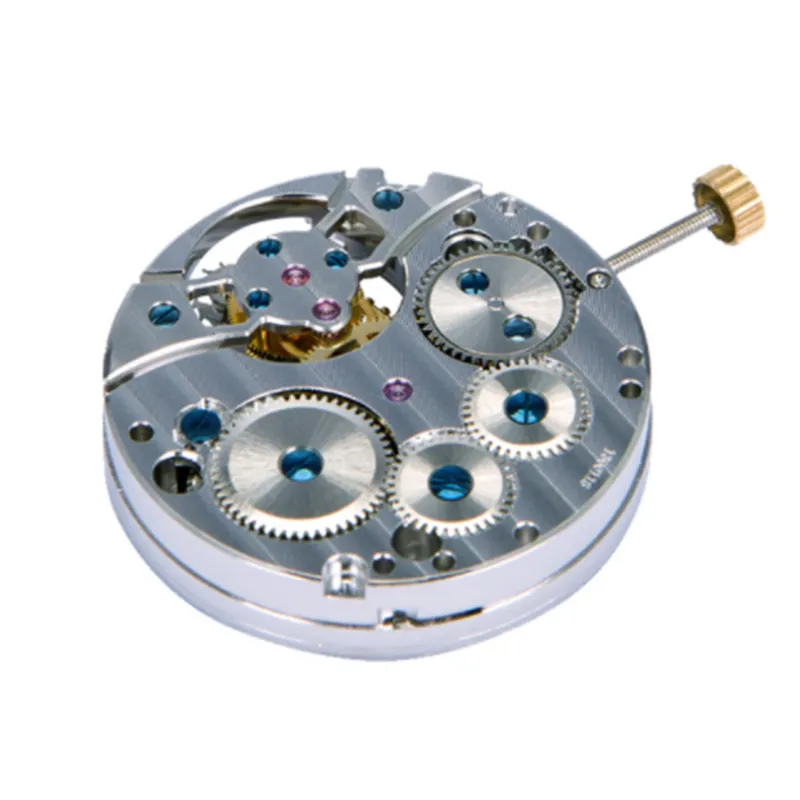
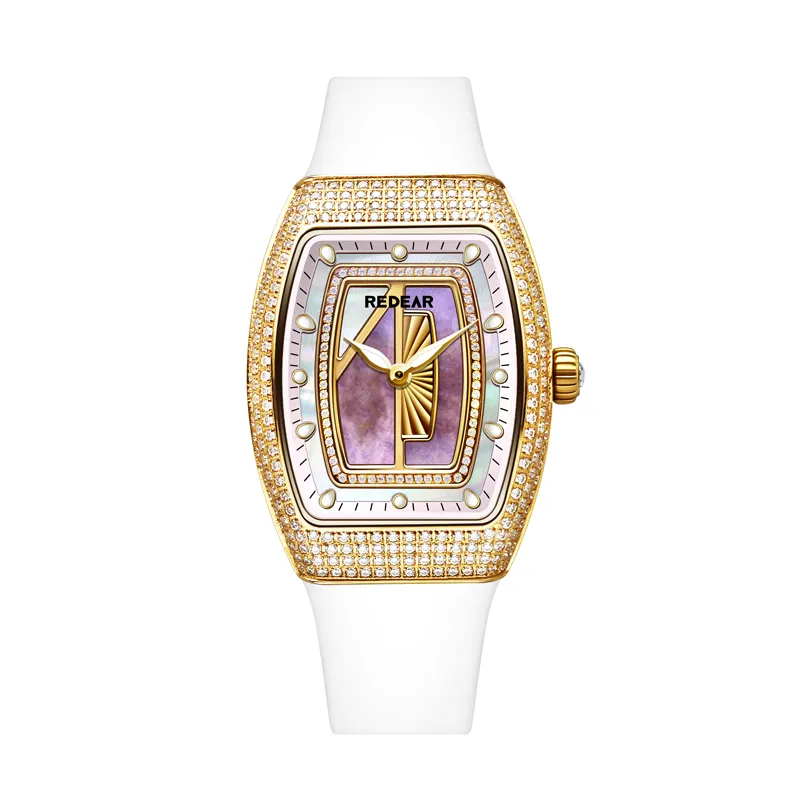
Recommended Shijin Watch Products
The most popluar shijin products


In the watch industry, a brand's core competitiveness lies not only in its design philosophy and market operations, but also in the robust support of its back-end supply chain. For watch brands, finding a factory with both strong R&D capabilities and quality control for in-depth cooperation is tantamount to installing a "dual engine" for brand development. This cooperation is far more than simple "OEM manufacturing," but a strategic alliance based on co-creation of design, collaborative technology, and shared commitment to quality. This article will analyze how brands can accurately connect with high-quality factories to achieve win-win cooperation from the perspective of the factory's core capabilities.
The premise for brand owners to cooperate with factories is a comprehensive verification of the factory's overall capabilities. Design and development and quality control are the two core aspects, while the professionalism of production, after-sales service and other services must also be taken into account to form a closed loop of capabilities.
1.Design and R&D capabilities: from concept to practical implementation
A high-quality factory's design and R&D capabilities are a crucial support for a brand's competitive differentiation. This goes beyond simply replicating blueprints; it involves deep involvement in product co-creation. First, it's essential to assess whether the factory possesses a complete design team and R&D system, capable of providing end-to-end solutions based on brand needs, from appearance design and functional development to process optimization. For example, using 3D digital twin technology to preview design effects in real time can help avoid production conflicts later on.
2.Production capacity: flexible allocation and efficiency assurance
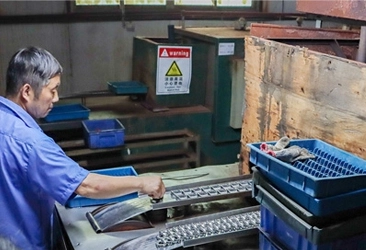
Production capacity directly determines the delivery cycle and market response speed of a brand's products. High-quality factories need to balance large-scale production capacity with flexible customization capabilities. On the one hand, it is necessary to examine the factory's production line configuration and capacity limit, whether it has hardware facilities such as a Class 10,000 cleanroom and precision assembly equipment, and whether it can manage the entire production process through an ERP system to significantly compress the traditional production cycle.
On the other hand, flexible minimum order quantities and multi-category production capabilities are equally crucial. For emerging brands or niche collaborations, can the factory support small-batch customization (such as 300 or even 50 pieces as a minimum order) to reduce trial-and-error costs through digital twin development systems and 3D printing technology? For large-volume orders from established brands, the factory needs to have the ability to flexibly adjust production capacity while ensuring consistent quality control.
3.Quality Assurance Capability: End-to-end control provides brand owners with superior quality assurance.
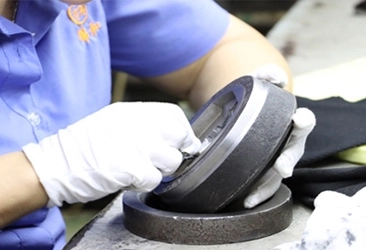
As precision-manufactured items, quality is the lifeline of a brand, and a factory's quality control capabilities must be maintained at every stage, from raw materials to finished products. Before collaborating with a brand, it is crucial to thoroughly verify the factory's quality control system: whether it is equipped with high-end testing equipment such as testing instruments for each component and salt spray chambers, and whether it can conduct rigorous tests on the movement's precision, material composition, and water resistance. During the collaboration process, the factory must implement multi-level quality inspection procedures, from raw material warehousing ( such as watch cases, dials, hands, straps, movements, and crowns) to movement assembly, case coating, and finished product assembly, with inspection records kept for each process, and even support third-party testing by SGS/BV institutions .
The value of a high-quality factory lies not only in its hard power, but also in its professionalism and dedication throughout the entire cooperation process and its after-sales support, so that brand owners have no worries.
1.Professionalism and dedication: The warmth of cooperation is reflected in the details.
The factory's professionalism and dedication are evident in every step of the process, from demand matching and quotation to sampling and production. A reliable factory will have a dedicated business team that responds to brand needs within 24 hours and provides professional cost optimization suggestions based on brand positioning, such as reducing mold opening costs through shared mold solutions. Every detail is adjusted until the brand confirms, and an intellectual property protection agreement is signed to safeguard the brand's design rights.
Throughout the production process, the sales representative follows up closely, proactively providing feedback on production progress. Any abnormalities are promptly coordinated and resolved, ensuring timely information is relayed to the customer. The sales representative's dedication and industry expertise are crucial; they serve as an important bridge in the cooperation between the two parties.
2.After-sales support capability: Long-term protection of brand reputation
A comprehensive after-sales system is key to a closed-loop cooperation, and high-quality factories can provide brands with full-cycle after-sales support. On one hand, they offer clear warranty policies, providing corresponding warranty periods for different types of watches, equipped with professional repair teams to handle functional malfunctions and other issues , and establishing a rapid response mechanism to address after-sales problems within 48 hours, providing spare parts support (e.g., 1% spare parts for export orders ). Furthermore, factories can also empower brands with after-sales support, resolving related issues encountered by customers.
A healthy collaboration between brands and factories must be built on mutual trust and shared goals. Brands should clearly communicate their positioning , cost budgets or market prices , target audience needs, and product standards, providing factories with ample room for research and development. They should also proactively participate in key review processes, such as sample confirmation and finalizing quality control standards before mass production. Factories, in turn, must adhere to ethical standards, strictly fulfill contractual obligations, refrain from unauthorized material changes or process reductions, and actively share new industry technologies and processes to support brand iteration and upgrades.
In conclusion, in today's increasingly competitive watch industry, the collaboration between brands and high-quality factories has long transcended a mere "supply and demand" relationship, becoming a community of shared value creation. The factory's design and development, production, quality assurance, after-sales service, and professional dedication collectively form a solid foundation for brand development. Only through precise alignment and deep collaboration can each watch possess both aesthetic appeal and superior quality, allowing it to establish a firm foothold in the market and become a brand benchmark that withstands the test of time.